Hall of Influence
People who shaped history across a range of fields and societies.
Photographs, historical portraits or later depictions; not every person has an authentic portrait.
 ALFGRN · CC BY-SA 2.0 · Wikimedia CommonsFounder of the Akkadian Empire, which around 2300 BCE brought the Sumerian city-states and northern Mesopotamia under a single ruler. He is often named as the first person in recorded history to rule an empire. The dates of his reign are uncertain: usually c. 2334–2279 BCE, according to a more recent proposal c. 2316–2277 BCE.PoliticsRulers of antiquityALFGRN · CC BY-SA 2.0 · Wikimedia Commons
Sargon of Akkad
2360 BCE – 2279 BCE Mefman00 · CC0 · Wikimedia CommonsAkkadian princess and high priestess of the moon god Nanna at Ur around 2300 BC. A series of Sumerian hymns is attributed to her, including 'The Exaltation of Inanna' and a cycle of temple hymns. She is therefore often regarded as the earliest author known by name, although her authorship is disputed among specialists.Arts & cultureLiteratureMefman00 · CC0 · Wikimedia Commons
Enheduanna
2300 BCE – 2250 BCE Mbzt · CC BY 3.0 · Wikimedia CommonsAmorite king of Babylon (c. 1792–1750 BCE) who brought most of Mesopotamia under his rule and is known for the law stele that bears his name.PoliticsRulers of antiquityMbzt · CC BY 3.0 · Wikimedia Commons
Hammurabi
1810 BCE – 1750 BCE Unknown · CC0 · Wikimedia CommonsFemale pharaoh of the Eighteenth Dynasty who ruled Egypt first as regent and then as king, known for her building projects and the trading expedition to Punt.PoliticsRulers of antiquityUnknown · CC0 · Wikimedia Commons
Hatshepsut
1507 BCE – 1458 BCE ولاء · Public domain · Wikimedia CommonsEgyptian pharaoh of the 18th Dynasty who reigned from 1479 to 1425 BCE, for the first twenty-odd years alongside his stepmother and aunt Hatshepsut. As sole ruler he led seventeen or more campaigns in the Levant and Nubia: he took Megiddo and advanced across the Euphrates. The course of those campaigns is recorded in the Annals on the walls of the temple of Karnak.PoliticsRulers of antiquityولاء · Public domain · Wikimedia Commons
Thutmose III
1481 BCE – 1425 BCE Unknown · CC BY-SA 2.5 · Wikimedia CommonsEgyptian pharaoh of the 18th Dynasty who reigned from c. 1353 to 1336 BCE (or 1351–1334). He replaced the traditional worship of many gods with a cult centred on the sun disc Aten, founded the new capital Akhetaten (Amarna) and had a distinctive artistic style developed. After his death that religious course was reversed and his name was removed from monuments.PoliticsRulers of antiquityUnknown · CC BY-SA 2.5 · Wikimedia Commons
Akhenaten
1373 BCE – 1336 BCE Pbuergler · CC BY-SA 3.0 · Wikimedia CommonsPharaoh of the 19th Dynasty who ruled Egypt from c. 1279 to 1213 BCE. He campaigned in the Levant, concluded a peace treaty with the Hittites after the Battle of Kadesh of which both versions survive, and commissioned monuments such as Abu Simbel and the Ramesseum.PoliticsRulers of antiquityPbuergler · CC BY-SA 3.0 · Wikimedia Commons
Ramesses II
1303 BCE – 1213 BCE LBM1948 · CC BY-SA 4.0 · Wikimedia CommonsIranian religious reformer and prophet, regarded as the founder of Zoroastrianism. In the Gathas, hymns in Old Avestan attributed to him, he appears as a priest and poet who proclaims the worship of Ahura Mazda, the 'wise lord', and puts the choice between truth (asha) and the lie (druj) at the centre. When and where he lived is unknown; the dates given here follow the period around 1000 BC in which most scholars place him.ReligionFounders & teachersLBM1948 · CC BY-SA 4.0 · Wikimedia Commons
Zoroaster
1100 BCE – 1023 BCE Photograph by Mike Peel ( www.mikepeel.net ). · CC BY-SA 4.0 · Wikimedia CommonsPoet to whom the ancient Greeks attributed the 'Iliad' and the 'Odyssey', the oldest and most influential works of European literature. Whether a single Homer existed is uncertain: the poems grew out of a centuries-long tradition of oral performance and probably took shape in the eighth or seventh century BCE. The dates given here are an estimate.Arts & cultureLiteraturePhotograph by Mike Peel ( www.mikepeel.net ). · CC BY-SA 4.0 · Wikimedia Commons
Homer
750 BCE – 700 BCE Tangopaso · Public domain · Wikimedia CommonsKing of Kush, in present-day Sudan, and pharaoh of the 25th Dynasty, who ruled Egypt and Nubia from 690 to 664 BCE. He had temples built from Karnak to Jebel Barkal and resisted the Assyrian invasions, but lost Lower Egypt to the armies of Esarhaddon and Ashurbanipal. He was buried beneath the largest pyramid at Nuri.PoliticsRulers of antiquityTangopaso · Public domain · Wikimedia Commons
Taharqa
730 BCE – 664 BCE KeyolTranslater · CC BY-SA 4.0 · Wikimedia CommonsKing of the Neo-Assyrian Empire from 669 to about 631 BCE and the last Assyrian king to wage war across the whole Near East. He fought in Egypt, Elam and Babylonia, where his elder brother Shamash-shum-ukin rose against him. At Nineveh he had a library of tens of thousands of clay tablets assembled, the source of, among other texts, the best-preserved version of the Epic of Gilgamesh.PoliticsRulers of antiquityKeyolTranslater · CC BY-SA 4.0 · Wikimedia Commons
Ashurbanipal
685 BCE – 631 BCE Unknown · Public domain · Wikimedia CommonsKing of the Neo-Babylonian Empire from 605 to 562 BCE. As crown prince he defeated Egypt at Carchemish; as king he subdued the Levant, destroyed Jerusalem and its temple and deported a large part of the population of Judah to Babylonia. In Babylon he had the Ishtar Gate, the processional way and temples rebuilt.PoliticsRulers of antiquityUnknown · Public domain · Wikimedia Commons
Nebuchadnezzar II
642 BCE – 562 BCE Mohammad Reza Domiri Ganji محمدرضا دومیری گنجی · CC BY-SA 4.0 · Wikimedia CommonsFounder of the Achaemenid Persian Empire, which under his rule came to include Media, Lydia and Babylonia and grew into the largest empire of its time.PoliticsRulers of antiquityMohammad Reza Domiri Ganji محمدرضا دومیری گنجی · CC BY-SA 4.0 · Wikimedia Commons
Cyrus the Great
600 BCE – 530 BCE Dayodaya · CC BY-SA 3.0 · Wikimedia CommonsIndian religious teacher venerated by Jains as the 24th and last tirthankara, 'ford-maker', of the present world age. According to Jain and Buddhist sources he was a contemporary of the Buddha. Jain tradition sees him not as a founder but as the renewer of an older teaching; historians regard him as the one who gave Jainism its lasting form, with its emphasis on non-violence (ahimsa) and asceticism.ReligionFounders & teachersDayodaya · CC BY-SA 3.0 · Wikimedia Commons
Mahavira
599 BCE – 527 BCE Zhang Lu · Public domain · Wikimedia CommonsLegendary Chinese sage to whom the 'Daodejing' is attributed, the founding text of Daoism. In just over eighty short chapters it praises the Way (dao), simplicity and 'non-interference'. Whether he existed is uncertain; the text was probably compiled in the fourth or third century BCE, and the dates given here are those of tradition.PhilosophyClassical thinkersZhang Lu · Public domain · Wikimedia Commons
Laozi
571 BCE – 471 BCE Unknown author · Public domain · Wikimedia CommonsGreek philosopher from Samos who founded a community in southern Italy with its own rules of life and a doctrine of the transmigration of souls. For his followers number was the key to the order of the world, from music to the stars. The theorem that bears his name had been known in Babylonia for centuries; he himself left nothing in writing.PhilosophyClassical thinkersUnknown author · Public domain · Wikimedia Commons
Pythagoras
570 BCE – 495 BCE พระมหาเทวประภาส วชิรญาณเมธี (ผู้ถ่าย-ปล่อยสัญญาอนุญาตภาพให้นำไปใช้ได้เพื่อการศึกษาโดยอยู่ภา่ยใต้ cc-by-sa-3.0) ผู้สร้างสรรค์ผลงาน/ส่งข้อมูลเก็บในคลังข้อมูลเสรีวิกิมีเดียคอมมอนส์ - เทวประภาส มากคล้าย · CC BY-SA 3.0 · Wikimedia CommonsWandering teacher from the north-east of the Indian subcontinent on whose teaching Buddhism is based. His dates are disputed: traditionally ca. 563–483 BCE, while many modern scholars place his death ca. 410–400 BCE.ReligionFounders & teachersพระมหาเทวประภาส วชิรญาณเมธี (ผู้ถ่าย-ปล่อยสัญญาอนุญาตภาพให้นำไปใช้ได้เพื่อการศึกษาโดยอยู่ภา่ยใต้ cc-by-sa-3.0) ผู้สร้างสรรค์ผลงาน/ส่งข้อมูลเก็บในคลังข้อมูลเสรีวิกิมีเดียคอมมอนส์ - เทวประภาส มากคล้าย · CC BY-SA 3.0 · Wikimedia Commons
Gautama Buddha
563 BCE – 483 BCE Anonymous Chinese painter of the Western Han period · Public domain · Wikimedia CommonsChinese thinker whose ethics of virtue, duty and family shaped East Asia for 2,500 years.PhilosophyClassical thinkersAnonymous Chinese painter of the Western Han period · Public domain · Wikimedia Commons
Confucius
551 BCE – 479 BCE Rumlu · Public domain · Wikimedia CommonsPersian King of Kings of the Achaemenid house, who from 522 to 486 BCE ruled an empire stretching from the Indus to the Aegean and Egypt. He divided it into satrapies, introduced a system of coinage and taxation and standard weights and measures, had roads built and began the construction of Persepolis. His punitive expedition against Athens came to a halt at Marathon in 490 BCE.PoliticsRulers of antiquityRumlu · Public domain · Wikimedia Commons
Darius the Great
550 BCE – 486 BCE Copy of Kresilas · Public domain · Wikimedia CommonsAthenian statesman who for more than thirty years was the leading voice of the democracy. Under him poor citizens too were paid for holding office, the Delian League became an Athenian empire and the Parthenon and the other temples rose on the Acropolis. He led the city into the Peloponnesian War and died of the plague.PoliticsRulers of antiquityCopy of Kresilas · Public domain · Wikimedia Commons
Pericles
495 BCE – 429 BCE Yair-haklai · CC BY-SA 3.0 · Wikimedia CommonsAthenian sculptor of the fifth century BC. He made the colossal gold-and-ivory statues of Athena in the Parthenon and of Zeus at Olympia; the latter was later counted among the Seven Wonders of the World. His original work is lost and is known from descriptions and Roman copies.Arts & cultureVisual artsYair-haklai · CC BY-SA 3.0 · Wikimedia Commons
Phidias
480 BCE – 430 BCE Copy of Lysippos (?) · Public domain · Wikimedia CommonsAthenian philosopher who used critical dialogue to question virtue, knowledge and justice. His thought is known chiefly through his pupils, not his own writings.PhilosophyClassical thinkersCopy of Lysippos (?) · Public domain · Wikimedia Commons
Socrates
470 BCE – 399 BCE Unidentified engraver · Public domain · Wikimedia CommonsGreek physician from the island of Kos, the 'father of medicine'. The writings handed down under his name explain disease by natural causes and not by the wrath of gods, and stress observation, way of life and prognosis. How much of it is his own, nobody knows.ScienceLife, medicine & earthUnidentified engraver · Public domain · Wikimedia Commons
Hippocrates
460 BCE – 370 BCE Marie-Lan Nguyen · Public domain · Wikimedia CommonsGreek philosopher and founder of the Academy in Athens. His dialogues examine knowledge, ethics and the organisation of society.PhilosophyClassical thinkersMarie-Lan Nguyen · Public domain · Wikimedia Commons
Plato
428 BCE – 348 BCE After Lysippos · Public domain · Wikimedia CommonsGreek philosopher who established logic, biology, ethics and politics as systematic fields of study.PhilosophyClassical thinkersAfter Lysippos · Public domain · Wikimedia Commons
Aristotle
384 BCE – 322 BCE anonymous · Public domain · Wikimedia CommonsChinese philosopher of the Warring States period, regarded in the tradition as the most important Confucian after Confucius himself. He taught that human nature has an inclination towards the good and that a ruler who oppresses his people loses the Mandate of Heaven.PhilosophyClassical thinkersanonymous · Public domain · Wikimedia Commons
Mencius
372 BCE – 289 BCE Hua Zili (華祖立) · Public domain · Wikimedia CommonsChinese philosopher of the Warring States period (fourth century BC), after whom the book 'Zhuangzi' is named, one of the two foundational texts of Daoism alongside the 'Daodejing'. The book uses stories, dialogues and paradoxes to relativise fixed distinctions between good and bad, useful and useless, or life and death. Little is known of his life and his dates are an estimate; of the 33 chapters, usually only the first seven are attributed to him.PhilosophyClassical thinkersHua Zili (華祖立) · Public domain · Wikimedia Commons
Zhuangzi
369 BCE – 286 BCE Unknown author · Public domain · Wikimedia CommonsMacedonian king who conquered the Persian Empire and advanced into South Asia. His campaigns spread Greek culture and also involved destruction and enslavement.MilitaryAncient & medieval commandersUnknown author · Public domain · Wikimedia Commons
Alexander the Great
356 BCE – 323 BCE Rvalette · CC BY-SA 3.0 · Wikimedia CommonsGreek seafarer, geographer and astronomer from Massalia (Marseille) who travelled to north-western Europe around 325 BC. His account 'On the Ocean' is lost and known only from quotations by later writers; in it he described Britain, the island of Thule, the midnight sun and a link between the tides and the Moon.ExplorationSeafarersRvalette · CC BY-SA 3.0 · Wikimedia Commons
Pytheas of Massalia
350 BCE – 285 BCE आशीष भटनागर at Hindi Wikipedia · Public domain · Wikimedia CommonsFounder of the Maurya Empire, which he built up from Magadha in north-eastern India around 320 BCE and which stretched from the Ganges valley to the Indus valley and Gujarat. He drove out the Nanda dynasty and the Macedonian governors left behind by Alexander the Great, and around 305–303 BCE concluded a treaty with Seleucus I. The chronology of his life is uncertain because the sources were written centuries later.PoliticsRulers of antiquityआशीष भटनागर at Hindi Wikipedia · Public domain · Wikimedia Commons
Chandragupta Maurya
350 BCE – 295 BCE Unknown artist · Public domain · Wikimedia CommonsGreek philosopher who founded the school known as the Garden in Athens. He taught that everything consists of atoms and void, that the gods do not concern themselves with humans and that death is not to be feared. He saw the goal of life in a calm and painless existence, to be reached through moderation, friendship and understanding of nature.PhilosophyClassical thinkersUnknown artist · Public domain · Wikimedia Commons
Epicurus
341 BCE – 270 BCE Paolo Monti · CC BY-SA 4.0 · Wikimedia CommonsHellenistic philosopher from Citium in Cyprus and founder of the Stoic school, which he led in Athens from about 300 BC. Building on the Cynics, he taught that happiness consists in a virtuous life in agreement with nature and reason, and that external things such as wealth or pain are in themselves neither good nor bad. Stoicism became one of the major philosophical schools of the Greek and Roman world.PhilosophyClassical thinkersPaolo Monti · CC BY-SA 4.0 · Wikimedia Commons
Zeno of Citium
334 BCE – 262 BCE Jusepe de Ribera (Spanish / Italian, 1591 - 1652) (1591 - 1652) – artist (Spanish / Italian) Details on Google Art Project · Public domain · Wikimedia CommonsGreek mathematician who worked in Alexandria around 300 BCE. In the thirteen books of his 'Elements' he derived geometry and number theory step by step from a few definitions and axioms. Almost nothing is known of his life; even his dates are an estimate.ScienceMathematics & computingJusepe de Ribera (Spanish / Italian, 1591 - 1652) (1591 - 1652) – artist (Spanish / Italian) Details on Google Art Project · Public domain · Wikimedia Commons
Euclid
325 BCE – 265 BCE Photo Dharma from Sadao, Thailand · CC BY 2.0 · Wikimedia CommonsThird emperor of the Maurya Empire (c. 268–232 BCE), who after the war in Kalinga pursued a policy of dhamma that he had recorded in rock and pillar inscriptions.PoliticsRulers of antiquityPhoto Dharma from Sadao, Thailand · CC BY 2.0 · Wikimedia Commons
Ashoka
304 BCE – 232 BCE Domenico Fetti · Public domain · Wikimedia CommonsGreek mathematician and engineer from Syracuse who calculated areas and volumes, investigated the laws of the lever and of floating bodies, and died when the Romans took his city.ScienceMathematics & computingDomenico Fetti · Public domain · Wikimedia Commons
Archimedes
287 BCE – 212 BCE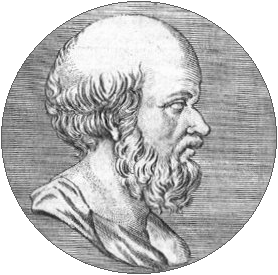 Unknown · Public domain · Wikimedia CommonsGreek scholar from Cyrene who headed the library of Alexandria from about 245 BC and worked in mathematics, geography, astronomy, chronology and poetry. He calculated the circumference of the Earth from shadow measurements at Alexandria and Syene, drew a world map with parallels and meridians and is the earliest known author to use the word geography.ScienceMathematics & computingUnknown · Public domain · Wikimedia Commons
Eratosthenes
276 BCE – 195 BCE Unknown (18??–18??) · Public domain · Wikimedia CommonsFirst emperor of a unified China, who standardised administration, writing and measures. His authoritarian rule mobilised large numbers of forced labourers for wars and construction projects.PoliticsRulers of antiquityUnknown (18??–18??) · Public domain · Wikimedia Commons
Qin Shi Huang
259 BCE – 210 BCE Fratelli Alinari · Public domain · Wikimedia CommonsCarthaginian general who crossed the Alps into Italy in the Second Punic War and inflicted a heavy defeat on Rome at Cannae, but ultimately lost the war.MilitaryAncient & medieval commandersFratelli Alinari · Public domain · Wikimedia Commons
Hannibal
247 BCE – 183 BCE PHG · Public domain · Wikimedia CommonsChinese envoy of Emperor Wu of the Han dynasty who travelled to Central Asia between 138 and 126 BC to seek an alliance against the Xiongnu. He returned without a treaty, but his reports on Ferghana, Sogdia, Bactria and lands beyond led to regular contacts between the Han court and the west, which are seen as the beginning of the Silk Road.ExplorationOverland travellersPHG · Public domain · Wikimedia Commons
Zhang Qian
164 BCE – 114 BCE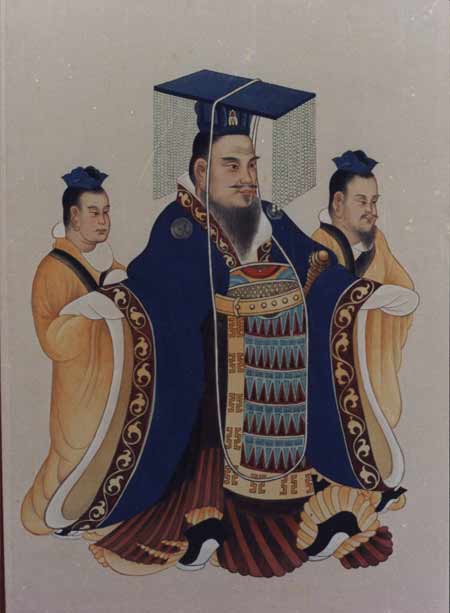 Unknown author · Public domain · Wikimedia CommonsSeventh emperor of the Han dynasty, who reigned for 54 years, from 141 to 87 BCE. He made Confucianism the state doctrine, centralised government, introduced state monopolies on salt and iron and expanded the empire into Korea, Vietnam and Central Asia. His envoy Zhang Qian established contacts that later developed into the Silk Road.PoliticsRulers of antiquityUnknown author · Public domain · Wikimedia Commons
Emperor Wu of Han
156 BCE – 87 BCE Ángel M. Felicísimo from Mérida, España · Public domain · Wikimedia CommonsRoman general and statesman whose conquests and seizure of power ushered in the end of the Republic.MilitaryAncient & medieval commandersÁngel M. Felicísimo from Mérida, España · Public domain · Wikimedia Commons
Julius Caesar
100 BCE – 44 BCE Louis le Grand · Public domain · Wikimedia CommonsLast reigning ruler of Ptolemaic Egypt. She used political and personal alliances in an effort to preserve her kingdom in the face of Rome.PoliticsRulers of antiquityLouis le Grand · Public domain · Wikimedia Commons
Cleopatra VII
69 BCE – 30 BCE Justin Benttinen · CC BY-SA 4.0 · Wikimedia CommonsFirst Roman emperor, who established the principate after the civil wars, received the honorific Augustus in 27 BCE and ruled the Roman Empire for more than forty years.PoliticsRulers of antiquityJustin Benttinen · CC BY-SA 4.0 · Wikimedia Commons
Augustus
63 BCE – 14 Unknown artist · Public domain · Wikimedia CommonsJewish preacher from Galilee and central figure of Christianity. Historians place his birth around 6–4 BCE and his crucifixion around 30–33 CE; Christians believe he is the risen Son of God.ReligionFounders & teachersUnknown artist · Public domain · Wikimedia Commons
Jesus of Nazareth
6 BCE – 30 Calidius · CC BY-SA 3.0 · Wikimedia CommonsRoman Stoic philosopher, statesman and dramatist from Hispania. He was tutor and then adviser to Emperor Nero and wrote philosophical essays, 124 moral letters and tragedies; his prose works are one of the main sources for Stoic ethics. In AD 65 he was forced to take his own life for alleged involvement in a conspiracy against Nero.PhilosophyClassical thinkersCalidius · CC BY-SA 3.0 · Wikimedia Commons
Seneca
4 BCE – 65 Unknown author · Public domain · Wikimedia CommonsGreek mathematician and engineer in Alexandria, probably of the first century AD. In his writings he described, among other things, the aeolipile, a sphere spun by escaping steam, an automaton that dispensed water when a coin was inserted, an organ driven by a wind wheel and a mechanical puppet theatre, as well as the formula for the area of a triangle from the lengths of its sides.Industrialists & innovatorsTechnology & spaceflightUnknown author · Public domain · Wikimedia Commons
Hero of Alexandria
10 – 70 John Opie · Public domain · Wikimedia CommonsQueen of the Iceni, a British Celtic tribe in present-day East Anglia, who in 60 or 61 CE led a revolt against Roman rule in Britain. Her army destroyed Camulodunum (Colchester), Londinium (London) and Verulamium (St Albans), but was then defeated by the Roman governor Gaius Suetonius Paulinus. What is known about her comes almost entirely from the Roman historians Tacitus and Cassius Dio.PoliticsRulers of antiquityJohn Opie · Public domain · Wikimedia Commons
Boudica
30 – 61 Gai Qi (改琦), 1773–1828 · Public domain · Wikimedia CommonsChinese historian and writer of the Eastern Han dynasty, the first woman known as a historian in China. She completed her brother Ban Gu's work on the 'Book of Han' and wrote the 'Lessons for Women', a Confucian code of conduct that influenced the upbringing of girls in East Asia for centuries.PhilosophyClassical thinkersGai Qi (改琦), 1773–1828 · Public domain · Wikimedia Commons
Ban Zhao
45 – 117