🦠 Archean · 3.5–3.2 bn years ago Stromatolites They are among the earliest geological evidence for life and show how microbes changed Earth's surface. 📍 1 site Image: Didier Descouens · CC BY-SA 4.0 · Wikimedia Commons
🦠 Proterozoic before the Cryogenian · 1.9–1.8 bn years ago Grypania The fossil is an important, though disputed, indication of early complex or eukaryotic life. 📍 1 site Image: Xvazquez · CC BY-SA 3.0 · Wikimedia Commons
🪸 Ediacaran · 575–555 Ma Charnia Its discovery was among the first compelling evidence that complex life existed before the Cambrian. 📍 1 site Image: Smith609 at English Wikipedia · CC BY 2.5 · Wikimedia Commons
🪸 Ediacaran · 558–555 Ma Dickinsonia Dickinsonia is one of the best-known Ediacaran fossils and helps researchers investigate the origins of animals. 📍 1 site Image: Ghedoghedo · CC BY-SA 3.0 · Wikimedia Commons
🪸 Ediacaran · 555–538.8 Ma Kimberella The traces around Kimberella provide rare direct evidence of movement and feeding before the Cambrian explosion. 📍 1 site Image: Aleksey Nagovitsyn ( User:Alnagov ) · CC BY-SA 4.0 · Wikimedia Commons
🐟 Paleozoic before the Permian · 518–515 Ma Haikouichthys It is among the earliest known candidates for vertebrates and marks an important step in the evolution of fish. 📍 1 site Image: User:Giant Blue Anteater · Public domain · Wikimedia Commons
🐚 Paleozoic before the Permian · 508–505 Ma Anomalocaris This distinctive radiodont is a key example of the early diversity of large active predators. 📍 1 site Image: Chris Woodrich · CC BY-SA 4.0 · Wikimedia Commons
🐚 Paleozoic before the Permian · 508–505 Ma Hallucigenia The fossil illustrates both anatomical diversity and the changing nature of palaeontological reconstruction. 📍 1 site Image: Han Zeng · CC0 · Wikimedia Commons
🐚 Paleozoic before the Permian · 508–505 Ma Opabinia Opabinia shows how experimental and varied body forms were during the Cambrian. 📍 1 site Image: Han Zeng · CC0 · Wikimedia Commons
🦂 Paleozoic before the Permian · 508–497 Ma Paradoxides Large trilobites such as Paradoxides show the rapid diversification of arthropods in Cambrian seas. 📍 1 site Image: Ryan Schwark · CC0 · Wikimedia Commons
🐚 Paleozoic before the Permian · 508–505 Ma Pikaia Pikaia is one of the best-known early chordates and provides context for the origins of vertebrates. 📍 1 site Image: DataBase Center for Life Science (DBCLS) · CC BY 4.0 · Wikimedia Commons
🐚 Paleozoic before the Permian · 455–445 Ma Cameroceras Straight-shelled nautiloids were among the largest predators in Ordovician seas. 📍 1 site Image: James St. John · CC BY 2.0 · Wikimedia Commons
🌿 Paleozoic before the Permian · 433–393 Ma Cooksonia Cooksonia is one of the earliest well-known vascular plants and documents the colonisation of land. 📍 1 site Image: Jonathan Chen · CC BY-SA 4.0 · Wikimedia Commons
🦂 Paleozoic before the Permian · 410–390 Ma Jaekelopterus It is one of the largest known arthropods and shows that some Devonian predators reached impressive sizes. 📍 1 site Image: Ghedoghedo · CC BY-SA 4.0 · Wikimedia Commons
🐟 Paleozoic before the Permian · 382–358.9 Ma Dunkleosteus This armoured fish is one of the best-known apex predators from before the rise of modern sharks. 📍 1 site Image: James St. John · CC BY 2.0 · Wikimedia Commons
🐟 Paleozoic before the Permian · 375–372 Ma Tiktaalik Tiktaalik documents a transition in body structure between fish and early tetrapods, without itself being a land animal. 📍 1 site Image: Eduard Solà · CC BY-SA 3.0 · Wikimedia Commons
🐸 Paleozoic before the Permian · 365–360 Ma Ichthyostega Ichthyostega documents the transition from fish to land animal, one of the great steps in vertebrate evolution. 📍 1 site Image: OlegTarabanov · CC BY-SA 3.0 · Wikimedia Commons
🌿 Paleozoic before the Permian · 359–299 Ma Scale tree (Lepidodendron) Scale trees supplied much of the plant material from which Carboniferous coal formed, the fuel of the Industrial Revolution. 📍 1 site Image: Falconaumanni · CC BY-SA 3.0 · Wikimedia Commons
🦂 Paleozoic before the Permian · 323–299 Ma Arthropleura Arthropleura was one of the largest known land-dwelling arthropods in Earth's history. 📍 1 site Image: Mickaël Lhéritier, Gregory D. Edgecombe, Russell J. Garwood, Adrien Buisson, Alexis Gerbe, Nicolás Mongiardino Koch, … · CC BY 4.0 · Wikimedia Commons
🦎 Paleozoic before the Permian · 315–312 Ma Hylonomus Hylonomus is regarded as one of the earliest known amniotes and marks reproduction becoming less dependent on water. 📍 1 site Image: Natural History Museum, London, modified by Jason D. Pardo, Kendra Lennie & Jason S. Anderson (2020) · CC BY 4.0 · Wikimedia Commons
🦂 Paleozoic before the Permian · 305–299 Ma Meganeura It is an iconic example of the exceptional size attained by insects in Carboniferous ecosystems. 📍 1 site Image: Gaëlle Doitteau & Sandra DAILLIE · CC BY 4.0 · Wikimedia Commons
🦴 Permian · 295–272 Ma Dimetrodon Dimetrodon shows that large synapsids were dominant predators long before the dinosaurs. 📍 1 site Image: H. Zell · CC BY-SA 3.0 · Wikimedia Commons
🐟 Permian · 290–270 Ma Helicoprion Its tooth whorl makes Helicoprion one of the most recognisable Permian fish and one long reconstructed incorrectly. 📍 1 site Image: James St. John · CC BY 2.0 · Wikimedia Commons
🦴 Permian · 260–252 Ma Inostrancevia As one of the largest gorgonopsians, Inostrancevia shows the diversity of Permian synapsid predators. 📍 1 site Image: Unknown · CC BY-SA 3.0 · Wikimedia Commons
🦴 Triassic · 251.9–247 Ma Lystrosaurus This herbivore is a well-known example of a survivor of the greatest mass extinction in Earth's history. 📍 1 site Image: Rama · CC BY-SA 2.0 fr · Wikimedia Commons
🌊 Triassic · 242–237 Ma Nothosaurus As an early coastal dweller, Nothosaurus shows reptiles recolonising the seas during the Triassic. 📍 1 site Image: Elke Wetzig at commons.wikipedia · CC BY-SA 3.0 · Wikimedia Commons
🦎 Triassic · 242–237 Ma Tanystropheus Its extreme neck is a remarkable example of evolutionary specialisation among Triassic reptiles. 📍 1 site Image: Ghedoghedo · CC BY-SA 3.0 · Wikimedia Commons
🥚 Triassic · 231–229 Ma Eoraptor Eoraptor is one of the earliest known dinosaurs and helps reconstruct the group's first diversification. 📍 1 site Image: Rjcastillo · CC BY-SA 4.0 · Wikimedia Commons
🥚 Triassic · 231–229 Ma Herrerasaurus It is one of the oldest known large predatory dinosaurs and shows how early dinosaurs already took on diverse forms. 📍 1 site Image: ★Kumiko★ · CC BY-SA 2.0 · Wikimedia Commons
🦎 Triassic · 228–220 Ma Postosuchus Postosuchus represents the large crocodile-line archosaurs that dominated terrestrial environments before the Jurassic extinction. 📍 1 site Image: Dallas Krentzel · CC BY 2.0 · Wikimedia Commons
🌊 Triassic · 228–208 Ma Shonisaurus Shonisaurus was one of the largest known Triassic marine reptiles. 📍 1 site Image: ★Kumiko★ from Tokyo, Japan · CC BY-SA 2.0 · Wikimedia Commons
🦖 Triassic · 214–201.4 Ma Coelophysis Its well-preserved skeletons provide an exceptional view of early theropods and Triassic ecosystems. 📍 1 site Image: James St. John · CC BY 2.0 · Wikimedia Commons
🦕 Triassic · 214–204 Ma Plateosaurus Plateosaurus is one of the best-known early large herbivores and shows precursors of sauropods. 📍 1 site Image: FunkMonk · CC BY-SA 3.0 · Wikimedia Commons
🪽 Triassic · 210–201.4 Ma Eudimorphodon The fossils show that pterosaurs developed different teeth and feeding strategies early in their history. 📍 1 site Image: Tommy from Arad · CC BY 2.0 · Wikimedia Commons
🌊 Jurassic · 199–190 Ma Ichthyosaurus Fossils found by Mary Anning and her family at Lyme Regis helped shape palaeontology as a scientific discipline. 📍 1 site Image: Gary Todd · CC0 · Wikimedia Commons
🦕 Jurassic · 199–192 Ma Mussaurus Mussaurus provides some of the earliest evidence of herd behaviour in dinosaurs and shows how sauropodomorphs grew up. 📍 1 site Image: Eva K. · GFDL 1.2 · Wikimedia Commons
🌊 Jurassic · 199–190 Ma Plesiosaurus One of the first named plesiosaurs, known from the exceptional fossils of Lyme Regis. 📍 1 site Image: the paleobear · CC BY 2.0 · Wikimedia Commons
🛡️ Jurassic · 199–191 Ma Scelidosaurus Scelidosaurus helps researchers understand the early evolution of armoured dinosaurs. 📍 1 site Image: 5of7 · CC BY-SA 2.0 · Wikimedia Commons
🦖 Jurassic · 196–188 Ma Cryolophosaurus It was the first predatory dinosaur found in Antarctica and the first non-avian dinosaur from that continent to be formally named. 📍 1 site Image: Jens Lallensack · CC BY-SA 4.0 · Wikimedia Commons
🦖 Jurassic · 193–183 Ma Dilophosaurus It is one of the best-known large predatory dinosaurs of the Early Jurassic in North America. 📍 1 site Image: Eduard Solà · CC BY-SA 3.0 · Wikimedia Commons
🐚 Jurassic · 183–175 Ma Ammonite (Dactylioceras) Ammonites such as Dactylioceras are among the most important index fossils for dating Jurassic rocks. 📍 1 site Image: Kevmin · CC BY-SA 3.0 · Wikimedia Commons
🦖 Jurassic · 168–165 Ma Megalosaurus In 1824 William Buckland made Megalosaurus the first dinosaur to be validly described in science – before the word 'dinosaur' even existed. 📍 1 site Image: Ballista at English Wikipedia · CC BY-SA 3.0 · Wikimedia Commons
🌊 Jurassic · 165–155 Ma Liopleurodon Liopleurodon represents the large pliosaurid predators that inhabited Jurassic seas. 📍 1 site Image: Ghedoghedo · CC BY-SA 3.0 · Wikimedia Commons
🦖 Jurassic · 161–159 Ma Anchiornis Anchiornis was the first Mesozoic dinosaur whose almost complete colour pattern became known, and it lies close to the origin of birds. 📍 1 site Image: Jonathan Chen · CC BY-SA 4.0 · Wikimedia Commons
🦖 Jurassic · 160–158 Ma Guanlong Guanlong helps reconstruct the early evolutionary history of tyrannosauroids, long before Tyrannosaurus rex. 📍 1 site Image: Jonathan Chen · CC BY 4.0 · Wikimedia Commons
🦕 Jurassic · 160–150 Ma Mamenchisaurus Mamenchisaurus is a well-known example of the long necks that Asian sauropods evolved independently. 📍 1 site Image: Zhangzhugang · CC BY-SA 4.0 · Wikimedia Commons
🦕 Jurassic · 156–146 Ma Brontosaurus Brontosaurus is a textbook example of how scientific names disappear and return as more fossils and better analyses become available. 📍 1 site Image: Matthew Bellemare · CC BY-SA 2.0 · Wikimedia Commons
🦖 Jurassic · 155–145 Ma Allosaurus Allosaurus was one of the dominant large predators of Late Jurassic Morrison ecosystems. 📍 1 site Image: The_Wookies · CC BY 2.5 · Wikimedia Commons
🦖 Jurassic · 155–148 Ma Ceratosaurus The nearly complete skeleton from Garden Park is still the best specimen and helps to understand the ceratosaurs, a separate branch of the theropods. 📍 1 site Image: Jens Lallensack · CC BY-SA 4.0 · Wikimedia Commons
🛡️ Jurassic · 155–150 Ma Stegosaurus It is one of the most recognisable armoured dinosaurs and a characteristic herbivore of the Late Jurassic. 📍 1 site Image: Susannah Maidment et al. & Natural History Museum, London · CC BY 4.0 · Wikimedia Commons
🦕 Jurassic · 154–150 Ma Brachiosaurus Its body structure shows one of the many ways sauropods exploited abundant plant resources. 📍 1 site Image: Matt Wedel · CC BY 3.0 · Wikimedia Commons
🦕 Jurassic · 154–152 Ma Diplodocus Diplodocus is one of the best-known long-bodied sauropods from the rich Morrison fossil beds. 📍 1 site Image: ScottRobertAnselmo · CC BY-SA 3.0 · Wikimedia Commons
🛡️ Jurassic · 152–145 Ma Kentrosaurus Kentrosaurus shows that stegosaurs developed a distinctive body form in Late Jurassic African ecosystems. 📍 1 site Image: LoKiLeCh · CC BY 3.0 · Wikimedia Commons
🦖 Jurassic · 150.8–148.5 Ma Archaeopteryx Archaeopteryx is a classic transitional fossil and important evidence for the evolutionary origin of birds within theropod dinosaurs. 📍 1 site Image: H. Raab ( User: Vesta ) · CC BY-SA 3.0 · Wikimedia Commons
🪽 Jurassic · 150–148 Ma Rhamphorhynchus Its fossils provide rare insight into the flight anatomy and diet of Jurassic pterosaurs. 📍 1 site Image: M0tty · CC BY-SA 3.0 · Wikimedia Commons
🦕 Cretaceous · 130–120 Ma Amargasaurus With its bizarre neck spines, Amargasaurus shows how varied sauropods were, far beyond the image of the simple long-neck. 📍 1 site Image: Jan Helebrant · CC0 · Wikimedia Commons
🦖 Cretaceous · 130–125 Ma Baryonyx Baryonyx was the first good evidence that some large theropods ate fish, and it helped to make sense of the strange spinosaurids. 📍 1 site Image: ★Kumiko★ · CC BY-SA 2.0 · Wikimedia Commons
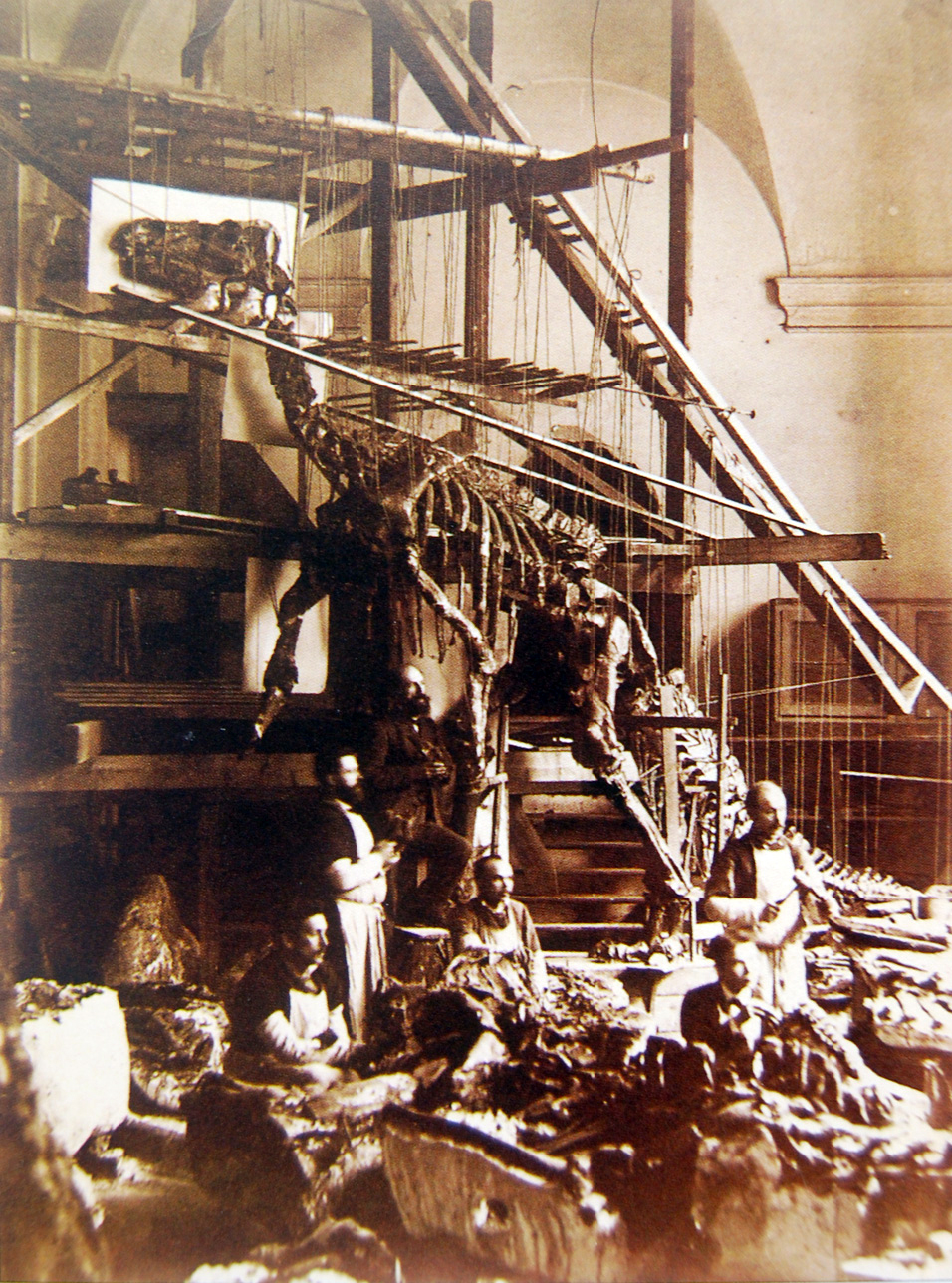
🦆 Cretaceous · 126–125 Ma Iguanodon The Bernissart discovery transformed dinosaur research by making dozens of almost complete skeletons available. 📍 1 site Image: Ben2 · CC BY-SA 3.0 · Wikimedia Commons
🐦 Cretaceous · 125–120 Ma Confuciusornis Because so many specimens exist, researchers can study growth, variation and plumage in Confuciusornis as in few other fossil birds. 📍 1 site Image: Tommy from Arad · CC BY 2.0 · Wikimedia Commons
🦖 Cretaceous · 125–120 Ma Microraptor Microraptor provides exceptional evidence for the diversity of feathers and flight strategies before modern birds. 📍 1 site Image: David W. E. Hone, Helmut Tischlinger, Xing Xu, Fucheng Zhang · CC BY 2.5 · Wikimedia Commons
🦏 Cretaceous · 125–120 Ma Psittacosaurus Exceptional Psittacosaurus fossils provide rare evidence about pigment, skin and behaviour in dinosaurs. 📍 1 site Image: Unknown · CC BY-SA 3.0 · Wikimedia Commons
🦣 Cretaceous · 125–123 Ma Repenomamus Repenomamus overturns the image that all mammals in the age of the dinosaurs were small and insignificant. 📍 1 site Image: Morosaurus millenii · CC BY-SA 4.0 · Wikimedia Commons
🦖 Cretaceous · 125–122 Ma Sinosauropteryx In 1996 it became the first dinosaur outside the birds found with feathers – the start of a revolution in how we see dinosaurs. 📍 1 site Image: Sam / Olai Ose / Skjaervoy from Zhangjiagang, China · CC BY-SA 2.0 · Wikimedia Commons
🦖 Cretaceous · 125–120 Ma Yutyrannus Yutyrannus shows that feathers were not limited to small dinosaurs and may also have occurred in large predators. 📍 1 site Image: Laika ac from USA · CC BY-SA 2.0 · Wikimedia Commons
🌊 Cretaceous · 120–100 Ma Kronosaurus Kronosaurus is one of the best-known pliosaurs; its over-long old reconstruction shows how science corrects itself. 📍 1 site Image: Stephen F. Poropat, Phil R. Bell, Lachlan J. Hart, Steven W. Salisbury, & Benjamin P. Kear · CC BY-SA 4.0 · Wikimedia Commons
🦖 Cretaceous · 115–108 Ma Deinonychus Deinonychus played a major role in reappraising dinosaurs as active and possibly warm-blooded, with bird-like behaviour. 📍 1 site Image: Jonathan Chen · CC BY-SA 4.0 · Wikimedia Commons
🛡️ Cretaceous · 112–110 Ma Borealopelta It is one of the best-preserved large dinosaur fossils ever found and shows what an armoured dinosaur looked like in life. 📍 1 site Image: ケラトプスユウタ · CC BY-SA 4.0 · Wikimedia Commons
🐊 Cretaceous · 112–110 Ma Sarcosuchus Sarcosuchus shows that large crocodile relatives were important predators in Cretaceous rivers alongside dinosaurs. 📍 1 site Image: Shadowgate from Novara, ITALY · CC BY 2.0 · Wikimedia Commons
🦖 Cretaceous · 100–93 Ma Spinosaurus Spinosaurus is an important case in debates about semi-aquatic lifestyles among non-avian dinosaurs. 📍 1 site Image: 3blindMies · CC BY-SA 4.0 · Wikimedia Commons
🦖 Cretaceous · 99–97 Ma Giganotosaurus Giganotosaurus shows that very large theropod predators evolved independently on different continents. 📍 1 site Image: Jonathan Chen · CC BY-SA 4.0 · Wikimedia Commons
🦕 Cretaceous · 96–92 Ma Argentinosaurus Its remains belong to some of the largest known land animals, but also illustrate the uncertainty of reconstructions from fragmentary fossils. 📍 1 site Image: William Irvin Sellers, Lee Margetts, Rodolfo Aníbal Coria, Phillip Lars Manning · CC BY 2.5 · Wikimedia Commons
🪽 Cretaceous · 86–84 Ma Pteranodon Pteranodon is one of the best-known pterosaurs and a recognisable example of flying reptiles from Cretaceous seas. 📍 1 site Image: Matt Martyniuk · CC BY 3.0 · Wikimedia Commons
🐊 Cretaceous · 82–73 Ma Deinosuchus Deinosuchus shows that in the Cretaceous crocodylians could play the role of top predator alongside dinosaurs. 📍 1 site Image: Source: Jonathan Cutrer Derivative: User:MathKnight · CC BY 4.0 · Wikimedia Commons
🌊 Cretaceous · 80–74 Ma Archelon Archelon was the largest known sea turtle and shows how large marine reptiles could grow in Cretaceous seas. 📍 1 site Image: Mike Beauregard · CC BY 2.0 · Wikimedia Commons
🌊 Cretaceous · 80–75 Ma Elasmosaurus Elasmosaurus is one of the most markedly long-necked plesiosaurs and illustrates how fossil reconstructions can be corrected. 📍 1 site Image: MCDinosaurhunter · CC BY-SA 3.0 · Wikimedia Commons
🦆 Cretaceous · 77–76 Ma Maiasaura The 1978 find provided the first strong evidence of parental care and colonial nesting in dinosaurs. 📍 1 site Image: Meridas (Vladimír Socha) · CC BY-SA 4.0 · Wikimedia Commons
🦕 Cretaceous · 76–70 Ma Dreadnoughtus Thanks to its exceptionally complete skeleton, Dreadnoughtus is a key to research on the largest land animals that ever lived. 📍 1 site Image: Gunnar Bivens · CC BY-SA 4.0 · Wikimedia Commons
🦆 Cretaceous · 76–73 Ma Parasaurolophus The hollow crest offers a rare window into communication and recognition in dinosaurs. 📍 1 site Image: Zissoudisctrucker · CC BY-SA 4.0 · Wikimedia Commons
🦏 Cretaceous · 75.5–75 Ma Styracosaurus Styracosaurus is one of the most striking examples of the enormous variety of horns and frills among ceratopsians. 📍 1 site Image: LittleLazyLass · CC BY-SA 4.0 · Wikimedia Commons
🦖 Cretaceous · 75–71 Ma Citipati Citipati nests provide direct evidence of parental care and feathers in non-avian theropods. 📍 1 site Image: Jonathan Chen · CC BY-SA 4.0 · Wikimedia Commons
🦏 Cretaceous · 75–71 Ma Protoceratops Protoceratops is one of the most common dinosaurs of the Gobi and is important for research on growth and nesting behaviour. 📍 1 site Image: Tadek Kurpaski from London, Poland · CC BY 2.0 · Wikimedia Commons
🦖 Cretaceous · 75–72.1 Ma Velociraptor Gobi fossils preserve feathers, nests and interactions that are rare in the dinosaur fossil record. 📍 1 site Image: Eduard Solà Vázquez · CC BY 3.0 · Wikimedia Commons
🦖 Cretaceous · 72–69 Ma Carnotaurus The combination of horns, tiny arms and skin impressions makes Carnotaurus an exceptionally distinctive theropod. 📍 1 site Image: Carnotaurus, Chlupáč Museum, Prague-2.jpg : Czech Wikipedia user Packa derivative work: Hic et nunc · CC BY-SA 3.0 · Wikimedia Commons
🌊 Cretaceous · 72–66 Ma Mosasaurus The Maastricht fossil contributed to the understanding that species can become extinct and that Earth has a deep prehistory. 📍 1 site Image: Ghedoghedo · CC BY-SA 3.0 · Wikimedia Commons
🦖 Cretaceous · 70–66 Ma Majungasaurus Majungasaurus is one of the best-known dinosaurs of the southern hemisphere and a key to the abelisaurids. 📍 1 site Image: Skye McDavid · CC BY 4.0 · Wikimedia Commons
🪽 Cretaceous · 70–66 Ma Quetzalcoatlus Quetzalcoatlus was among the largest known flying animals and broadens the picture of pterosaurs as both walkers and flyers. 📍 1 site Image: Ghedoghedo · CC BY-SA 3.0 · Wikimedia Commons
🦖 Cretaceous · 70–66 Ma Therizinosaurus Therizinosaurus challenges the stereotype of theropods as exclusively meat-eaters and demonstrates a highly specialised herbivore. 📍 1 site Image: Yuya Tamai from Gifu, Japan · CC BY 2.0 · Wikimedia Commons
🛡️ Cretaceous · 68–66 Ma Ankylosaurus Ankylosaurus represents the heavily armoured ankylosaurs at the end of the Cretaceous. 📍 1 site Image: Tim Evanson · CC BY-SA 2.0 · Wikimedia Commons
🦆 Cretaceous · 68–66 Ma Edmontosaurus Well-preserved skin and skeletons make Edmontosaurus an important source for hadrosaur anatomy. 📍 1 site Image: MCDinosaurhunter · CC BY-SA 3.0 · Wikimedia Commons
🪖 Cretaceous · 68–66 Ma Pachycephalosaurus The domed skull is a striking specialisation and makes the function of dinosaur skulls a subject of debate. 📍 1 site Image: IJReid · CC BY 4.0 · Wikimedia Commons
🦏 Cretaceous · 68–66 Ma Triceratops One of the last large ceratopsians, Triceratops is a frequently found herbivore of the Late Cretaceous. 📍 1 site Image: Source: Allie_Caulfield Derivative: User:MathKnight · CC BY-SA 3.0 · Wikimedia Commons
🦖 Cretaceous · 68–66 Ma Tyrannosaurus rex T. rex is one of the best-studied large theropods and an icon of the Late Cretaceous, shortly before the mass extinction. 📍 1 site Image: ScottRobertAnselmo · CC BY-SA 3.0 · Wikimedia Commons
🦎 Paleogene · 60–58 Ma Titanoboa Titanoboa shows how warm Palaeocene ecosystems could support large cold-blooded predators. 📍 1 site Image: Gretarsson · CC BY 4.0 · Wikimedia Commons
🐦 Paleogene · 56–45 Ma Gastornis Gastornis shows that large birds were important land animals alongside mammals during the Palaeogene. 📍 1 site Image: Vince Smith from London, United Kingdom · CC BY-SA 2.0 · Wikimedia Commons
🦣 Paleogene · 48–47 Ma Ambulocetus Ambulocetus is one of the most important transitional fossils showing how whales evolved from land mammals. 📍 1 site Image: Notafly · CC BY-SA 3.0 · Wikimedia Commons
🦣 Paleogene · 47.5–47 Ma Darwinius ('Ida') Ida is one of the best-preserved fossil mammals ever found and an example of how media attention and science can clash. 📍 1 site Image: Jens L. Franzen, Philip D. Gingerich, Jörg Habersetzer1, Jørn H. Hurum, Wighart von Koenigswald, B. Holly Smith · CC BY-SA 2.5 · Wikimedia Commons
🦣 Paleogene · 41–34 Ma Basilosaurus Basilosaurus is an important fossil for whale evolution and the adaptation of mammals to life at sea. 📍 1 site Image: Tim from Washington, D.C., United States of America · CC BY-SA 2.0 · Wikimedia Commons
🦣 Paleogene · 34–23 Ma Paraceratherium It is one of the largest known land mammals and shows the extensive radiation of rhinoceros relatives in the Oligocene. 📍 1 site Image: MikSed · CC BY-SA 4.0 · Wikimedia Commons
🐟 Neogene · 23–3.6 Ma Megalodon Megalodon was one of the largest known marine predators and helps reconstruct food webs in ancient oceans. 📍 1 site Image: JJonahJackalope · CC BY-SA 4.0 · Wikimedia Commons
🧍 Neogene · 3.9–2.9 Ma Australopithecus afarensis (Lucy) Lucy and other A. afarensis fossils show that bipedalism evolved while some ape-like traits were retained. 📍 2 sites Image: 120 · CC BY 2.5 · Wikimedia Commons
🦣 Quaternary · 2.5–0.01 Ma Smilodon The well-preserved remains from La Brea provide exceptional insight into predators and prey at the end of the Ice Age. 📍 1 site Image: JJonahJackalope · CC BY-SA 4.0 · Wikimedia Commons
🧍 Quaternary · 1.9–0.1 Ma Homo erectus Homo erectus was one of the longest-lived human species and an early migrant beyond Africa. 📍 2 sites Image: Eduard Pop et al. · CC BY 4.0 · Wikimedia Commons
🐦 Quaternary · 0.7–0.001 Ma Moa (Dinornis) Moas illustrate how isolated island faunas evolved distinctive large birds and how vulnerable they can be to human pressure. 📍 1 site Image: Natural History Museum, London · CC BY 4.0 · Wikimedia Commons
🦣 Quaternary · 0.7–0.004 Ma Woolly mammoth Frozen remains preserve hair, stomach contents and DNA, making mammoths exceptionally well studied. 📍 1 site Image: Lou.gruber · Public domain · Wikimedia Commons
🦣 Quaternary · 0.4–0.008 Ma Giant deer (Irish elk) With its extreme antlers, the giant deer is a classic example in debates about sexual selection and the extinction of the ice-age giants. 📍 1 site Image: Urville Djasim from The Netherlands · CC BY-SA 2.0 · Wikimedia Commons
🧍 Quaternary · 0.4–0.04 Ma Homo neanderthalensis Neanderthals were not direct ancestors of modern humans but a closely related human group with a shared history. 📍 1 site Image: Nahleghini · CC BY-SA 4.0 · Wikimedia Commons
🦣 Quaternary · 0.125–0.046 Ma Diprotodon Diprotodon was the largest known marsupial and a characteristic member of Australia's megafauna. 📍 1 site Image: Ghedoghedo · CC BY-SA 3.0 · Wikimedia Commons
🧍 Quaternary · 0.1–0.05 Ma Homo floresiensis The discovery showed that human evolution on islands could produce unexpected body forms and sizes. 📍 1 site Image: Rama · CC BY-SA 3.0 fr · Wikimedia Commons
🦣 Quaternary · 0.1–0.008 Ma Megatherium Megatherium shows that relatives of small tree-dwelling sloths could evolve into enormous land mammals in South America. 📍 1 site Image: en:User:Ballista · CC BY-SA 3.0 · Wikimedia Commons
 Iconic fossil