A kora player in Toubab Dialaw (Senegal). The kora is one of the instruments griots use to accompany their singing.
Image: M.GADJ! · CC BY-SA 4.0 · Wikimedia Commons
Tradition · Middle Ages
Griots of the Mandé
13th century (Mali Empire) · Kangaba, Mali · Mandé (West Africa)
Griots (jeli) are hereditary singers, storytellers and keepers of Mandé oral history, often accompanied on the kora, balafon or ngoni. In the epic of Sundiata Keita, founder of the Mali Empire (13th century), the hero is given the griot Balla Fasséké as adviser.
In 1352–53 Ibn Battuta described court poets and a balafon-like instrument in Mali. The tradition lives on, for example at commemorations in Kangaba.
Key facts
- Date
- 13th century (Mali Empire)
- Place
- Kangaba, Mali
- Culture
- Mandé (West Africa)
- Country
- Mali
- Kind
- Tradition
- Era
- Middle Ages (500 – 1450)
- Name
- Jeli (Manding), griot (French)
- Instruments
- Kora, balafon, ngoni
- Well-known families
- Kouyaté, Diabaté
- Epic
- Sundiata, founder of the Mali Empire (13th century)
- UNESCO
- Cultural space of the Sosso-Bala; Kamablon ceremony of Kangaba (2009)
Jeli: a hereditary profession
In Mandé society the jeli belong to the groups of artisans and artists, alongside the smiths among others. The profession passes from parents to children, within families such as the Kouyaté and the Diabaté. A jeli knows the genealogies of noble families, sings praise songs, mediates in conflicts and performs at weddings, naming ceremonies and other occasions.
A jeli and a patron family are bound by mutual obligations. The word griot is French, and its origin is uncertain.
Sundiata and Balla Fasséké
The epic of Sundiata tells how a child who at first could not walk grew into the founder of the Mali Empire. In exile he built alliances and, according to tradition, defeated King Soumaoro Kanté of Sosso at Kirina around 1235.
In the story Balla Fasséké, Sundiata's jeli, plays Soumaoro's marvellous balafon. According to tradition that instrument is the Sosso-Bala, still kept by the Kouyaté family in Niagassola in Guinea. The epic has been passed down orally and exists in many versions.
Kora, balafon and ngoni
The kora is a harp-lute with 21 strings, a long neck and a sound box made from a large calabash covered with cowhide; it is best known in Senegal, the Gambia, Guinea-Bissau and Mali. The balafon is a wooden xylophone with calabashes as resonators. The ngoni is a small lute with a wooden body.
Most instrumentalists are men, but female jeli, the jelimusow, are often the most famous singers.
What Ibn Battuta saw
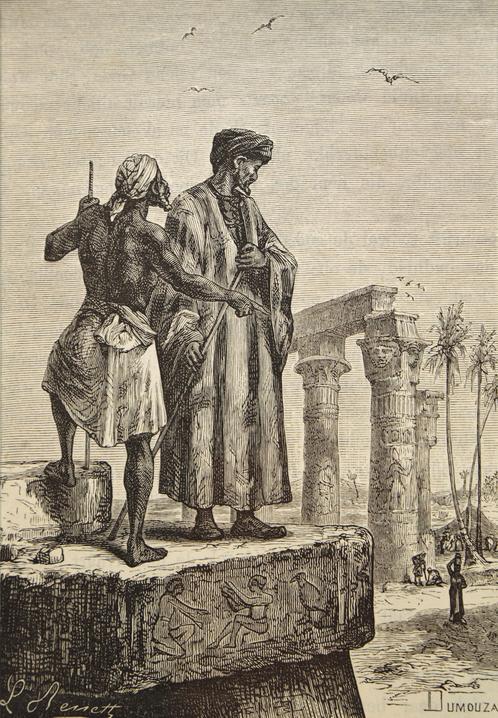
The Moroccan traveller Ibn Battuta visited the court of Mansa Sulayman in 1352–1353. He described how the interpreter and poet Dugha performed with his wives and young servants on feast days, using an instrument of reeds and small gourds, probably a balafon. He also saw poets in bird costumes reciting verses before the ruler. It is one of the oldest written testimonies to the role of court musicians in Mali.
Griots today
In Kangaba the shrine Kamablon is given a new thatched roof every seven years; at the ceremony jeli from nearby Kéla recite the history of the region. UNESCO recognised this ceremony in 2009 and the cultural space of the Sosso-Bala earlier. Modern musicians from griot families, such as the kora player Toumani Diabaté (1965–2024) and the singer Mory Kanté (1950–2020), made the music known worldwide.