
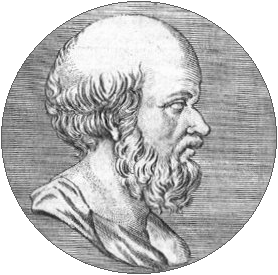
Image: O. Von Corven · Public domain · Wikimedia Commons
Science
Founding of the Library of Alexandria
c. 283 BCE · Alexandria
Under the first Ptolemies, in the early third century BC, the Mouseion with its library arose in Alexandria. The kings had scrolls collected and copied from the whole Greek world; estimates run to several hundred thousand scrolls.
Scholars such as Euclid, Eratosthenes, who calculated the circumference of the Earth, and Aristarchus worked there. The library did not perish in a single fire: it was damaged during Caesar's siege in 48 BC and declined over the following centuries.
Key facts
- Date
- c. 283 BCE
- Place
- Alexandria
- Country
- Egypt
- Category
- Science
- Significance
- Lesser-known
Background and run-up
Alexander the Great founded Alexandria in 331 BCE on the western edge of the Nile Delta. After his death in 323 BCE his general Ptolemy, the son of Lagus, took over the government of Egypt, and in 305 BCE he assumed the title of king. Historians regard the Lyceum of Aristotle in Athens, where scholars carried out research together and used a large collection of books, as a model for the institution in Alexandria.
According to the Letter of Aristeas, a Jewish text in Greek that is usually dated to the second century BCE, Demetrius of Phalerum was in charge of the royal library. This Athenian statesman, a pupil of Theophrastus, had been driven out of Athens in 307 BCE and later came to the court of Ptolemy I. The same letter relates that Ptolemy II had the Jewish law translated into Greek. Historians use the story with caution, because the letter was written long after the events and contains inaccuracies. Whether the library began under Ptolemy I or under his son is therefore uncertain.
What happened
The physician Galen described in the second century CE how the collection grew. Books found on ships in the harbour were copied on the king's orders, after which the library kept the original and the owner received the copy. According to Galen, Ptolemy III borrowed the official Athenian texts of Aeschylus, Sophocles and Euripides against a deposit of fifteen talents, and kept the originals. The poet Callimachus compiled the Pinakes, a catalogue of authors and their works in 120 books.
Immediate consequences
Zenodotus of Ephesus, the first librarian whose name is known, made an edition of Homer for which he compared manuscripts and marked lines that he considered spurious. Later librarians, Aristophanes of Byzantium and Aristarchus of Samothrace, continued this work of textual criticism. After seizing power in 145 BCE, Ptolemy VIII drove part of the scholars out of Alexandria. Aristarchus of Samothrace, at that moment head of the library, fled to Cyprus.
In the second century BCE the library gained a rival in Pergamon, where the kings of the Attalid dynasty built up a collection of their own. Pliny the Elder wrote, on the authority of Varro, that a Ptolemy then banned the export of papyrus and that Pergamon therefore turned to parchment. Historians consider this a legend, because animal skins had been used for writing long before. The word parchment does go back to the name of the city.
Legacy and remembrance
Various stories exist about the end of the library. During the war of the emperor Aurelian against Palmyra in the 270s the Brucheion was destroyed, the district where the palace and the main library stood. The Serapeum, which had earlier housed a daughter library, was destroyed in 391 on the orders of Bishop Theophilus. The story that the caliph Umar had the books burned after the Arab conquest of the city first appears more than five hundred years later, and historians regard it with scepticism. In 2002 the Bibliotheca Alexandrina opened in the city, a new library in memory of the old one.
Timeline
c. 331 BCE
Alexander the Great founds Alexandria on the western edge of the Nile Delta.
c. 283 BCE
Under Ptolemy I or Ptolemy II the Mouseion and the library come into being in Alexandria.
145 BCE
Ptolemy VIII drives scholars out of Alexandria, among them the librarian Aristarchus of Samothrace.
48 BCE
In the fighting for Alexandria Julius Caesar has ships in the harbour set on fire.
391
On the orders of Bishop Theophilus the Serapeum of Alexandria is destroyed.
2002
The new Bibliotheca Alexandrina opens its doors in Alexandria.
On the map
People involved
Sources
- Wikipedia – Library of Alexandria
- Encyclopaedia Britannica: Library of Alexandria
- The Vanished Library: A Wonder of the Ancient World (1990) · Luciano Canfora