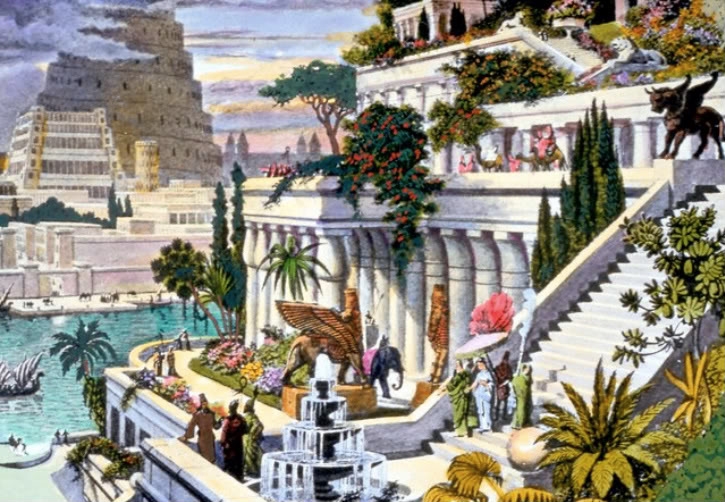
Hanging Gardens of Babylon
The gardens became an influential image of the intersection of nature, royal power and technology. Their inclusion among the wonders of the world also shows how travel literature and tradition can shape historical narratives.
Photo: Unknown author · Public domain · Wikimedia Commons
Facts
- Place
- Babylon, Iraq (traditional attribution)
- Civilisation / patron
- Traditionally attributed to the Neo-Babylonian Empire
- Built
- c. 600 BCE
- Status
- Lost
- Seven Wonders of the Ancient World
History
Greek and Roman writers described the Hanging Gardens as planted terraces supplied with artificial irrigation. A later tradition says that Nebuchadnezzar II had them built for his wife, but contemporary Babylonian sources do not confirm this. There is no convincing archaeological evidence for the gardens at Babylon; an alternative hypothesis places their model at Assyrian Nineveh. The dating and map location therefore reflect only the traditional Babylonian attribution, while the time and cause of their disappearance are unknown.
More from: Antiquity
- Great Pyramid of Giza
- Statue of Zeus at Olympia
- Temple of Artemis at Ephesus
- Mausoleum at Halicarnassus
- Colossus of Rhodes
- Lighthouse of Alexandria
- Stonehenge
- Göbekli Tepe
- Parthenon
- Persepolis
- Terracotta Army
- Petra
- Colosseum
- Catacombs of Kom el Shoqafa
- Teotihuacan
- Abu Simbel Temples
- Great Wall of China
- Nazca Lines
- Stelae of Aksum
- Sigiriya