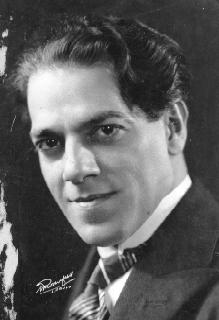
Image: Unknown author · Public domain · Wikimedia Commons
Photographs, historical portraits or later depictions; not every person has an authentic portrait.
Heitor Villa-Lobos
1887 – 1959
Brazilian composer who combined European classical forms with Brazilian popular music, such as the choro of Rio de Janeiro's street musicians. By his own account he wrote more than two thousand works, including the series 'Chôros' and 'Bachianas Brasileiras'.
Key facts
- Born
- 1887 · Rio de Janeiro
- Died
- 17 November 1959
- Place of death
- Rio de Janeiro, Brazil
- Cause of death
- cancer
- Era
- Modern era, Contemporary
Background & early life
Heitor Villa-Lobos was born on 5 March 1887 in Rio de Janeiro, then the capital of the Brazilian Empire. His father Raul was a civil servant and librarian, an educated man who pursued astronomy and music as an amateur. He taught his son to play the cello and took him to musical evenings with friends. The boy also learned the clarinet and the guitar, the instrument of Rio's street musicians.
As a teenager he went around with the chorões, the players of choro, a lively instrumental music for flute, guitar and cavaquinho that had arisen in Rio from European dances and Afro-Brazilian rhythms. From around 1905 he travelled, by his own account, through the Brazilian interior, but biographers doubt much of what he later told about these journeys. At the Instituto Nacional de Música he took lessons for a short time at most, so that as a composer he was largely self-taught. On 12 November 1913 he married the pianist Lucília Guimarães.
Core activities & thinking
In the 1910s he wrote his first large orchestral works, such as the ballets 'Amazonas' and 'Uirapuru', which he dated to 1917 and in which he depicted the rainforest and its legends in sound. In 1917 he met the French composer Darius Milhaud, who was staying in Rio as secretary to the diplomat Paul Claudel. A year later he met the pianist Arthur Rubinstein, who became a lifelong friend and played his music abroad. Between 1920 and 1929 he wrote the series 'Chôros', more than a dozen works for forces ranging from one guitar to a large orchestra with choir.
During his second stay in Paris concerts of his music made a strong impression, and the European premiere of 'Chôros No. 10' caused a stir there. Back in Brazil, in 1932 he became director of the Superintendência de Educação Musical e Artística, which introduced canto orfeônico, choral singing in schools that was meant to teach pupils discipline and love of country. For this teaching he collected and arranged folk and children's songs in the 'Guia prático', a series of eleven volumes. At the celebration of Independence Day on 7 September 1939, according to the reports, 30,000 children sang the national anthem.
The fifth 'Bachianas Brasileiras', for soprano and eight cellos, was written between 1938 and 1945. For the guitar he wrote twelve études, dedicated to the Spanish guitarist Andrés Segovia and dated 1929, five preludes in 1940 and in 1951 a concerto, again for Segovia. His output includes twelve symphonies and seventeen string quartets. After 1945 he received many commissions from the United States, such as the eleventh symphony for the Boston Symphony Orchestra in 1955. In 1955 and 1956 he also wrote the opera 'Yerma', after the play by Federico García Lorca.
Zeitgeist & culture
Brazil celebrated a hundred years of independence in 1922, and in those years artists and writers were looking for a culture that no longer imitated Europe. Mário de Andrade called on composers in his 'Ensaio sobre a música brasileira' of 1928 to make folk music their foundation. Oswald de Andrade described the absorption of European influences as a form of devouring in his 'Manifesto Antropófago' of the same year. The music of Villa-Lobos, which mixed Bach, choro and indigenous motifs, fitted that programme.
In October 1930 Getúlio Vargas came to power after an uprising, and in 1937 he established an authoritarian regime with the Estado Novo, which lasted until 1945. The government centralised education and used it to form a shared national identity in a country with great regional differences. Mass rallies, radio broadcasts and school celebrations were part of that policy. In this regime Villa-Lobos found a patron who gave him resources and authority for his plans for choral singing.
Societal impact
In Paris he made Brazilian art music known to critics and publishers, and the publishing house Max Eschig issued many of his works. The Conservatório Nacional de Canto Orfeônico was founded in 1942 to train the music teachers who were to lead choral singing in the schools. After the Second World War he conducted his own work with orchestras in the United States and Europe, and his music was performed and recorded more often there.
His close ties to the Vargas regime drew criticism. Critics accused him of serving an authoritarian government with mass choirs and patriotic songs, and his influential position made him less popular with some groups of musicians. Younger composers around the German émigré Hans-Joachim Koellreutter, who led the group Música Viva from 1939, sought another path, with the twelve-tone technique instead of a national style. Against them Villa-Lobos remained the model of a music built from Brazilian material.
Death & legacy
End of life
- Date
- 17 November 1959
- Place
- Rio de Janeiro, Brazil
- Cause of death
- cancer
- Manner of death: Illness
Circumstances
In 1948 Villa-Lobos was diagnosed with bladder cancer, for which he underwent surgery. He then continued to compose, conduct and travel for more than ten years, including regular visits to the United States. In 1959 he recorded 'Forest of the Amazon' with the soprano Bidu Sayão and the Symphony of the Air, an arrangement of his music for the film Green Mansions. In June of that year he offended many Brazilian musicians with an interview in which he said that Brazil was dominated by mediocrity. He died of cancer in Rio de Janeiro on 17 November 1959, aged 72; his companion Arminda Neves d'Almeida stayed with him to the end. He was given a state funeral, the last major public ceremony in Rio de Janeiro before the capital moved to Brasília in 1960, and was buried in the São João Batista Cemetery. In 1960 Arminda became director of the new Museu Villa-Lobos.
How many works Villa-Lobos left is uncertain. His own count includes arrangements and different versions of the same piece, and he sometimes gave works a different year from the one in which they were written. The Museu Villa-Lobos in Rio de Janeiro holds his manuscripts and has published a catalogue of his work. The Brazilian Academy of Music, which he founded in 1945, still exists.
Biographers such as the musicologist Gerard Béhague, who published a study of him in 1994, separate the stories the composer told himself from what the sources confirm. This concerns above all the journeys through the interior and the origin of melodies that he presented as folk music. His role under Vargas remains a subject of debate. Meanwhile his guitar works, the Chôros and the Bachianas Brasileiras are played and recorded worldwide.
Key moments
- Took part in the Semana de Arte Moderna in São Paulo in February 1922, the arts week regarded as the start of Brazilian modernism.
- Lived in Paris in 1923–1924 and 1927–1930, where his work was performed and published.
- From 1932, under the government of Getúlio Vargas, directed music education in Rio de Janeiro and organised choral concerts with tens of thousands of schoolchildren.
- Composed the nine 'Bachianas Brasileiras' between 1930 and 1945, combining the music of Bach with Brazilian popular music.
- Founded the Brazilian Academy of Music in 1945 and died in Rio de Janeiro on 17 November 1959.
Known travels & key locations
Recorded places in this person's life. Connecting lines are schematic, not exact travel routes.
Sources
- Wikipedia: Heitor Villa-Lobos
- Encyclopaedia Britannica: Heitor Villa-Lobos
- Encyclopedia.com: Villa-Lobos, Heitor (Baker's Biographical Dictionary of Musicians)
- Heitor Villa-Lobos: The Search for Brazil's Musical Soul (1994) · Gerard Béhague