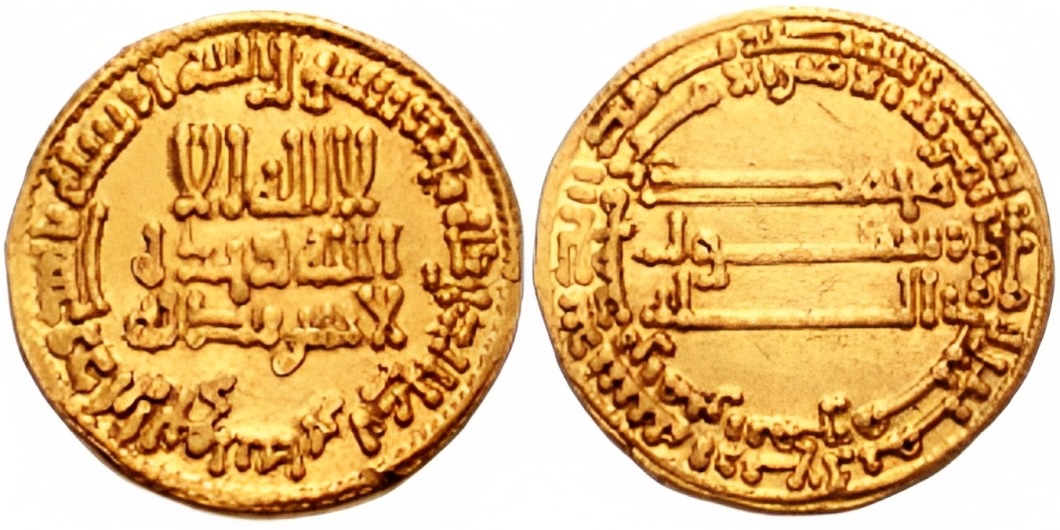
Image: 8/9th-century master(s) · CC BY-SA 2.5 · Wikimedia Commons
Photographs, historical portraits or later depictions; not every person has an authentic portrait.
Harun al-Rashid
766 – 809
Fifth caliph of the Abbasids, under whom Baghdad was the richest city in the world and became a centre of scholarship and translation. He exchanged embassies with Charlemagne and forced Byzantium to pay tribute. In the tales of the 'Thousand and One Nights' he lives on as the ruler who wanders his city in disguise.
Key facts
- Born
- 766 · Rayy
- Died
- 24 March 809
- Place of death
- Sanabad near Tus (now Mashhad, Iran)
- Cause of death
- illness during a campaign; its nature is uncertain
- Era
- Middle Ages
Background & early life
Harun was born at Rayy in 763 or 766, the son of al-Mahdi, who became the third caliph of the Abbasids in 775. His mother al-Khayzuran had come to the court as an enslaved woman; al-Mahdi freed her and married her. She backed Harun against his elder brother Musa al-Hadi, who was regarded as the first heir. His upbringing was entrusted to Yahya ibn Khalid, of the Persian family of the Barmakids, who was to remain his mentor and closest associate.
In 780 and 782 Harun, not yet twenty years old, was the nominal head of campaigns against Byzantium, while experienced commanders and Yahya held the real command. In 782 the army advanced as far as the Bosporus, after which the Empress Irene concluded a truce and promised an annual tribute. His father then gave him the honorific al-Rashid, 'the rightly guided', and placed him second in the succession, after al-Hadi. When al-Hadi had become caliph in 785, he tried to remove Harun from the succession in favour of his own son, but he died in September 786 in unclear circumstances.
Core activities & thinking
According to a well-known tradition, on the night of Harun's accession one caliph died, a second came to the throne and a third was born: his son al-Ma'mun. Harun placed day-to-day government in the hands of Yahya ibn Khalid as vizier, while Yahya's sons al-Fadl and Ja'far received high posts; Ja'far became the caliph's confidant. Until her death in 789 al-Khayzuran also exercised great influence over appointments and policy. Harun himself went on campaign regularly and made several pilgrimages to Mecca, and later writers described him as a ruler who alternated holy war and pilgrimage.
As early as 786 Harun grouped the towns behind the Byzantine frontier into a separate province, al-Awasim, as a second line of defence behind the fortified border posts. When the emperor Nikephoros I, shortly after his accession in 802, refused to pay the tribute that Irene had promised, Harun resumed the war on a large scale. In 806 he invaded Asia Minor with a large army and took the town of Heraclea in Cappadocia, after which Nikephoros paid again.
In 802 Harun settled the succession at Mecca in documents that were hung in the Kaaba. Al-Amin, his son by his wife Zubayda, was to succeed him as caliph, while al-Ma'mun, the son of Marajil, an enslaved Persian woman, was to govern Khorasan almost independently as second heir. A year later Harun had Ja'far executed and Yahya and al-Fadl imprisoned, and both died in captivity. Why the Barmakids fell is not made clear in the sources, and the story of a secret marriage between Ja'far and Harun's sister Abbasa is regarded as a later legend. Their place at the head of the administration went to al-Fadl ibn al-Rabi.
Zeitgeist & culture
Baghdad had been founded in 762 by Harun's grandfather al-Mansur as a round city on the Tigris. According to tradition a paper works was set up in the 790s on the initiative of the Barmakids, and paper then gradually replaced papyrus and parchment in the chancery. Working at the court were the jurist Abu Yusuf, who wrote a handbook on the land tax for Harun, the musicians Ibrahim al-Mawsili and his son Ishaq, and the poet Abu Nuwas. Harun's wife Zubayda had wells and resting places built along the pilgrim road from Kufa to Mecca.
The empire that Harun inherited stretched from North Africa to Central Asia, but at its edges the authority of Baghdad was weakening. Al-Andalus had been ruled by an Umayyad prince since 756, and in Morocco Idris, a descendant of Ali, established a dynasty of his own. In 800 Harun granted the governor of Ifriqiya, Ibrahim ibn al-Aghlab, the right to pass the office on to his descendants in return for a fixed annual payment. Harun had the imam Musa al-Kazim, whom Twelver Shi'a revere as their seventh imam, brought to Baghdad, where he died in captivity in 799.
Societal impact
Under Harun's rule several provinces saw unrest. In Syria feuds between Arab tribal groups flared up, and in Khorasan the governor Ali ibn Isa ibn Mahan provoked much resistance with heavy taxes from 796 onwards. Harun removed him only in 808, when the revolt in the east had already broken out. The fall of the Barmakids in 803 also deprived the administration of a family that had served at court since the first Abbasid caliphs.
In 811 the rivalry between al-Amin in Baghdad and al-Ma'mun in Khorasan turned into open war, known as the Fourth Fitna. Al-Ma'mun's general Tahir ibn al-Husayn defeated his brother's army and besieged Baghdad for more than a year from 812, and when the city fell in 813 al-Amin was killed. The siege destroyed large parts of the city, which had grown so strongly under Harun. Al-Ma'mun then ruled at first from Merv and settled in Baghdad only in 819.
Death & legacy
End of life
- Date
- 24 March 809
- Place
- Sanabad near Tus (now Mashhad, Iran)
- Cause of death
- illness during a campaign; its nature is uncertain
- Manner of death: Illness
Circumstances
In 808 Harun al-Rashid marched with an army to Khorasan to put down the revolt that Rafi ibn al-Layth had begun in Samarkand. He fell ill on the way and died on 24 March 809 in the village of Sanabad near Tus, in the east of present-day Iran. He was buried in the summer palace of the Abbasid governor of Khorasan, Humayd ibn Qahtaba. When the Shi'a imam Ali al-Rida was also buried there in 818, the site grew into the pilgrimage city of Mashhad. The story that shortly before his death Harun read verses by the poet Abu al-Atahiya on the transience of power and pleasure is also told of other caliphs. His division of the empire between his sons al-Amin and al-Ma'mun led to civil war soon after his death.
The main source for the reign is the chronicle of al-Tabari, completed a little over a century later, alongside collections of anecdotes and poetry. In it Harun appears as a pious pilgrim and a fighter against Byzantium, but also as a ruler who could act with sudden harshness, as against the Barmakids. The contacts with Charlemagne are known only from Frankish sources. The royal annals mention among other things the water clock that envoys of the caliph presented to Charlemagne in 807, while Arabic chronicles are silent about the exchange.
Outside the Islamic world Harun became known through the 'Thousand and One Nights', in which he appears with his vizier Ja'far and his executioner Masrur. These tales took shape largely centuries later and spread in Europe through the French translation by Antoine Galland, which appeared between 1704 and 1717. The English poet Alfred Tennyson wrote a poem in 1830 whose refrain recalls the 'golden prime of good Haroun Alraschid'. Whether the 'House of Wisdom' in Baghdad was already an institution for translation under Harun, or mainly a court library that grew only under al-Ma'mun, is disputed among historians.
Key moments
- Became caliph in September 786 and left government to the Persian vizier family of the Barmakids.
- Moved his court in 796 to Raqqa on the Euphrates, closer to the Byzantine frontier.
- Sent Charlemagne gifts around 802, including an elephant.
- Suddenly brought down the Barmakids in 803 and had their leader executed.
Known travels & key locations
Recorded places in this person's life. Connecting lines are schematic, not exact travel routes.
Sources
- Wikipedia: Harun al-Rashid
- Encyclopaedia Britannica: Hārūn al-Rashīd
- The Court of the Caliphs: The Rise and Fall of Islam's Greatest Dynasty (2004) · Hugh Kennedy