Image: Unknown · Public domain · Wikimedia Commons
Meteorites & impacts
Popigai impact
35.7 million years ago · Popigai, northern Siberia
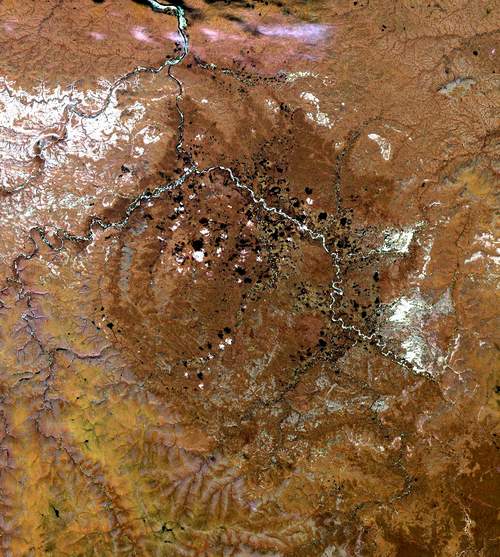
A crater about 100 kilometres across in the Siberian tundra, one of the largest and best preserved on Earth. The impact struck graphite-bearing rock and turned it into impact diamonds: small, very hard crystals in a quantity that Soviet geologists estimated at many billions of carats.
The area was therefore long closed; only in 1997 could an international expedition study it. Popigai is about the same age as the Chesapeake Bay crater; both fall in a period of strikingly many impacts at the end of the Eocene.
Approximate geological dating. The map shows the present-day location; an exact calendar date is unknown.
Key facts
- Date
- 35.7 million years ago
- Place
- Popigai, northern Siberia
- Country
- Russia
- Category
- Meteorites & impacts
- Significance
- Major
Impact data
- Type
- Impact crater
- Diameter
- 100 km
- Present state
- Eroded
- Evidence
- melt rock and impact glass, shocked minerals, ejecta layer
- Certainty
- Confirmed
- Dating
- ± 0.2 million years
Diameter, mass and age are estimates from the literature and may differ between sources.