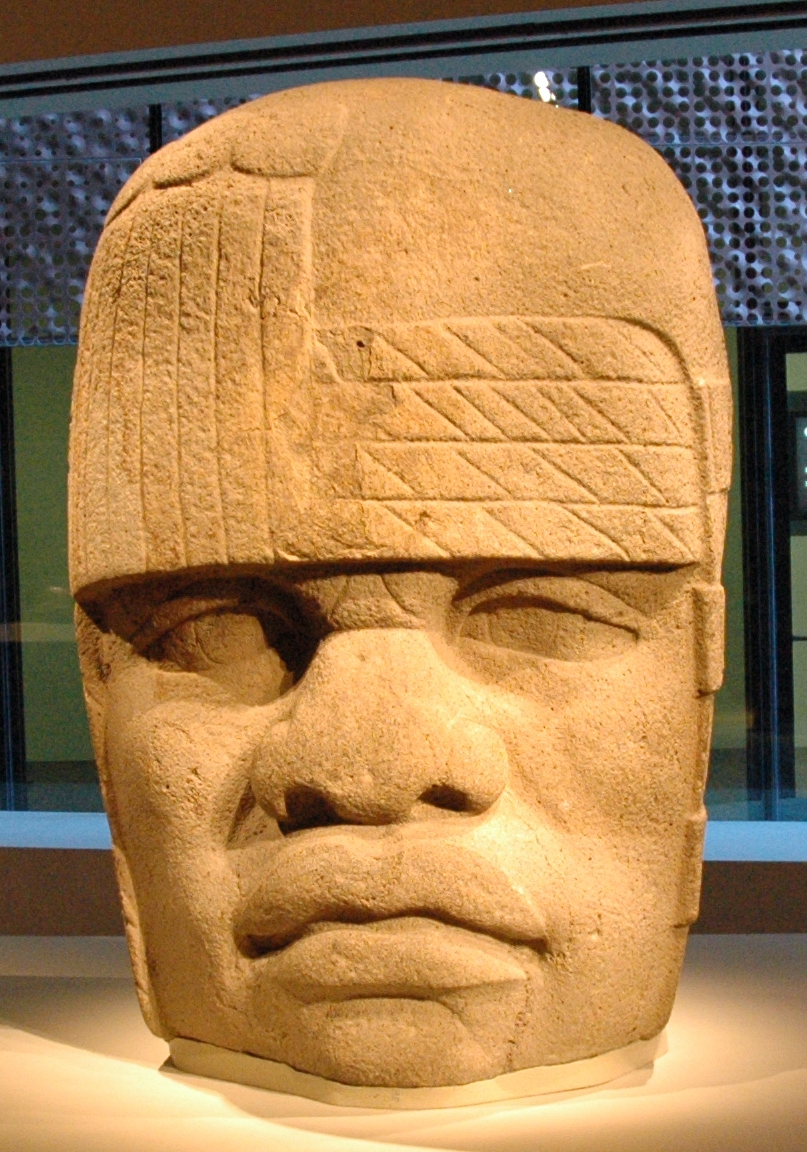
San Lorenzo Colossal Head 4, photographed during an exhibition in San Francisco (2006).
Image: Marshall Astor (Life on the Edge) · CC BY-SA 2.0 · Wikimedia Commons
Colossal heads of San Lorenzo
Unknown Olmec sculptors · c. 1200–900 BCE
Seventeen colossal Olmec stone heads are known, ten of them from San Lorenzo. The basalt came from the Tuxtla Mountains, tens of kilometres away. Each head wears its own helmet-like headdress and has individual features; most researchers interpret them as portraits of rulers. Several heads were damaged or buried in antiquity; whether this was ritual or for reuse is disputed.
Details
- Artist
- Unknown Olmec sculptors
- Date
- c. 1200–900 BCE
- Movement
- Mesoamerican art
- Technique and materials
- Basalt
- Dimensions
- height c. 1.6–2.8 m per head
- Made in
- San Lorenzo Tenochtitlán, Veracruz, Mexico
- Current location
- Mainly the Museo de Antropología de Xalapa, Xalapa
Mesoamerican art
Movement · 1500 BCE – 1521 · Latin America · Mexico and Central America
The art of the cultures of Mesoamerica, from the Olmecs to the Aztecs, up to the Spanish conquest. Monumental stone sculpture, wall paintings in temples and palaces and painted books (codices) served religious and dynastic purposes. Many works are known only from archaeological excavation; most codices were lost after 1521.
Characteristics
- Monumental sculpture in basalt and other stone
- Murals showing rulers, rituals and warfare
- Hieroglyphic texts and calendar dates within the images
- Pigments such as Maya blue
Significance
The heads are among the oldest monumental sculpture in the Americas and an important source on Olmec society, which left no readable texts. Moving stones weighing tens of tonnes points to organised authority.
